Installation guide
Whole-home generator installation in Columbia, SC
A permanent standby generator is one of the bigger investments you’ll make in your home. This guide walks you through the decisions that matter, from how much of the house to cover to where the unit sits, so you can plan with confidence before anyone pours a pad.
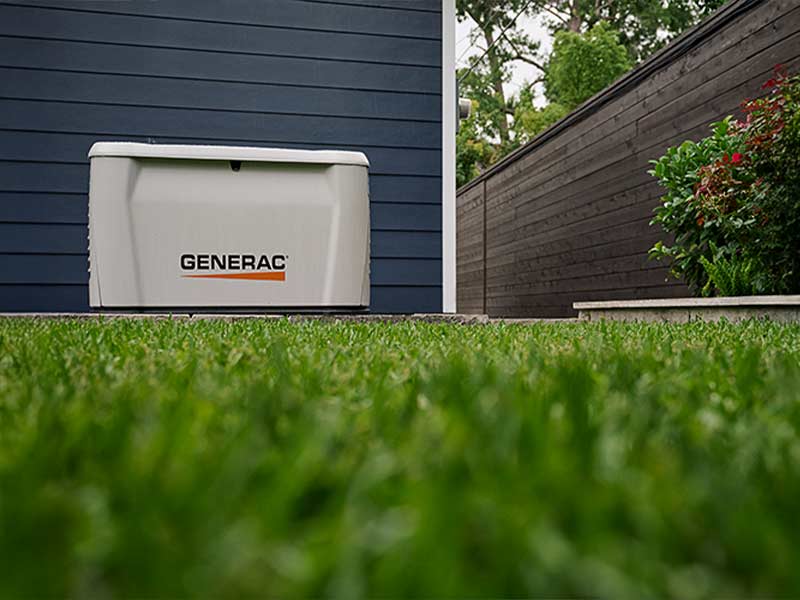
Why go permanent
What a standby generator does that a portable can’t.
A standby generator is wired into your home and connected to a fuel supply, so it takes over on its own when the power fails.
It starts without you
An automatic transfer switch senses the outage and brings the generator online, whether you’re home, at work in Columbia or away for the weekend.No refueling in the storm
It runs on natural gas from your utility line or propane from an on-site tank, so there are no gas cans to fill while roads are closed.It can run the whole house
Sized correctly, a standby system can carry central air, the kitchen and the rest of your circuits, not just a few extension cords.It’s built for safety
Installed outdoors with proper clearances and a transfer switch that keeps generator power from feeding back onto utility lines, protecting line workers.
Coverage options
Whole-home or partial-home coverage?
Whole-home coverage uses a generator large enough to run most or all of your house, often paired with a transfer switch installed at the electric service so every circuit is backed up. Life during an outage looks almost normal: the air conditioning keeps up with a July afternoon, and nobody has to decide which rooms get power.
Partial-home (essential-circuit) coverage backs up a chosen group of circuits, such as the refrigerator, some lighting, the furnace blower, a well pump and the internet. The generator can be smaller, but anything not on the list stays off.
Many homes land somewhere in between, using load management so a right-sized generator can still handle big appliances. Our generator sizing and transfer switch guide explains how that works in detail.

Fuel choice
Natural gas or propane?
Both are common for home standby generators. The right choice usually comes down to what’s already available at your property.
Natural gas
Utility-supplied, nothing to refill
If your home already has natural gas service, the generator connects to your gas line and draws fuel as it needs it, for as long as the utility supply holds.
Your gas meter and piping must be able to supply enough fuel for the generator plus your other gas appliances. Sometimes that means coordinating a meter upgrade with the gas utility.
Propane
On-site fuel for homes without gas service
Propane is the usual choice for homes without natural gas service, including many rural and lakefront properties. It’s stored in an above-ground or buried tank on your property.
Because the supply is finite, tank size determines how long you can run in an extended outage. Plan the tank with your propane supplier at the same time as the generator.
One detail people miss: generators publish separate output ratings for each fuel, and many models list a slightly lower rating on natural gas than on propane. Make sure any sizing is based on the fuel you’ll actually use.
Not sure which fuel or coverage fits your home?
Cagen Electric will look at your panel, your fuel options and what you want to keep running, then recommend a setup that makes sense.
Installation, step by step
What actually happens during installation.
Every property is different, but a professional residential installation generally follows this sequence.
01
Site assessment & load review
Your installer checks your electrical panel and service, major appliances, fuel source and possible generator locations.02
Permits
Electrical and, where required, gas or mechanical permits are obtained from your city or county before work begins.03
Pad & setting the unit
The generator is set on a level pad in a location that meets clearance requirements and keeps wiring and fuel runs practical.04
Fuel connection
A gas line is run from your meter, or a propane connection is made to your tank, with the regulator and shutoffs the system requires.05
Transfer switch & wiring
The automatic transfer switch is installed at your service or panel and wired to the generator, so power can never feed back onto utility lines.06
Inspection, startup & walkthrough
After inspection, the system is started, tested with a simulated outage, and you’re shown how it works and what the status indicators mean.
Placement & permits
Where the generator goes, and who signs off on it.
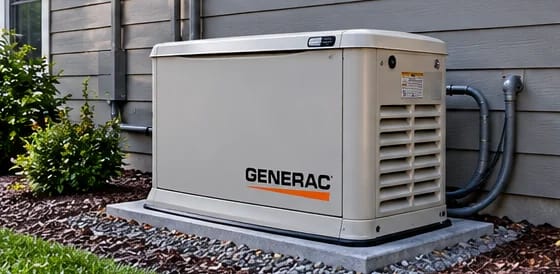
Placement balances several things at once. Manufacturers specify minimum clearances from walls, windows, doors, vents and other openings, mainly so exhaust can’t find its way inside. Local codes can add their own requirements. Within those limits, a location close to your electric meter and fuel source usually keeps the installation simpler.
Practical details matter too: drainage, access for future service, how the unit looks from the street and the patio, and, in neighborhoods with an HOA, any rules about equipment placement or screening.
Permits and inspections. A standby generator is permanent electrical work, and it normally requires a permit from the city or county where your home sits, followed by an inspection. Requirements differ depending on whether you’re inside city limits or in an unincorporated part of Richland, Lexington or Newberry County. In most cases the installing contractor obtains the permits and schedules the inspections, but confirm that with anyone you’re considering.
Cost factors
What determines the price of an installation.
We don’t publish one-size-fits-all prices, because two homes on the same street can need very different installations. These are the factors that move the number.
Generator size
Larger generators that carry central air and big appliances cost more than units sized for essential circuits.Transfer switch type
A whole-home, service-rated transfer switch is a different scope from a switch feeding a smaller essential-circuit panel.Distance & routing
The farther the generator sits from your meter, panel and fuel source, the more wire, conduit and piping it needs.Fuel work
Gas meter upgrades, new gas piping, or a propane tank and its installation can all add to the project.Electrical upgrades
Older panels or services sometimes need updating before a generator can be connected safely.Site & permit requirements
Pad preparation, grading, load management equipment and local permit fees vary by property.
Choosing an installer
How to choose the right installer.
A generator ties directly into your home’s electrical service, so the installer matters as much as the equipment. Whether you’re in Irmo, Lexington or out near Lake Murray, ask any company you’re considering:
- Are you a licensed electrical contractor, and who will be doing the electrical work?
- Will you calculate my loads, or just size the generator by square footage?
- Who handles the permits, inspections and any gas utility coordination?
- What does the written estimate include, from pad to final walkthrough?
- Can I read reviews from customers who’ve had similar work done?
Once it’s installed, a little routine care keeps it ready. See our generator maintenance and storm prep guide.
From a Chapin homeowner
Installed by a team customers recommend.
5.085+ Google reviews(opens Cagen Electric’s Google profile in a new tab)“Spencer and Vinny from Cagen Electric did an amazing job installing a Kohler generator at my home in Chapin, SC. They were professional, efficient, clean, and consistent throughout the entire installation. The work was done quickly and explained the whole process, and I couldn’t be happier with the results. Highly recommend Spencer, Vinny, and Cagen Electric!”
Keep planning
More generator guides
- Generator Sizing & Transfer SwitchesHow running and starting loads, load management and automatic transfer switches decide the right system for your home.Read the guide
- Generator Maintenance & Storm PrepExercise cycles, batteries, oil, warning lights and a practical checklist for getting your generator ready for storm season.Read the guide
- Midlands Home GeneratorsHow standby power works, our installation process, service area and customer reviews.Back to the homepage
Frequently asked questions
Installation questions, answered.
More of what homeowners ask before scheduling a standby generator installation.
Is a whole-home generator worth it compared with a smaller system?
It depends on how you live and how long you want to be comfortable during an outage. If you want central air, cooking, laundry and every outlet to keep working, whole-home coverage is the better fit. If your priority is protecting food, keeping the furnace or a few rooms going, and running a well or sump pump, an essential-circuit system can cost less. A consultation will show you what each option would mean for your house.
Can a standby generator be installed if I don't have natural gas?
Yes. Homes without natural gas service commonly use propane stored in an above-ground or underground tank. The tank size affects how long the generator can run before a refill, so it's worth planning with your propane supplier as well as your installer.
Where will the generator go on my property?
Usually on a level pad close to your electric meter and fuel source, which keeps wiring and gas runs shorter. The exact spot has to meet the manufacturer's clearance requirements from windows, doors, vents and other openings, plus any local code requirements, so it's chosen during the site visit.
Do I need to be home during the installation?
Not necessarily for all of it, but someone typically needs to provide access to the electrical panel and be available for the startup and walkthrough at the end. Your installer will tell you what to expect for your schedule.
Will a standby generator affect my homeowners insurance or home value?
That varies by insurer and by buyer, so we don't make promises either way. Some homeowners ask their insurance agent whether a permanently installed generator affects their policy. Keep your permit, inspection and installation paperwork; it's useful if you ever sell.
Free generator consultation
The next outage is coming. Your home can be ready for it.
Request a free consultation on the right standby generator for your household. It’s the simplest way to find out what it would take to keep your home running through the next storm.
Opens our consultation request form, hosted by Typeform, in a new tab.
Prefer to talk it through?
Call Cagen Electric (803) 590-1428Tell us about your home
A short set of questions about your property and what you want to keep running.
Hear from a local installer
Your request goes to Cagen Electric, who will follow up with you directly.
Get straight answers
Sizing, fuel and coverage options explained, with no decisions needed until you understand them.