Sizing guide
Generator sizing & automatic transfer switches
The right generator isn’t the biggest one you can afford. It’s the one matched to what your home actually draws, connected through a transfer switch that moves power safely. Here’s how that sizing and switching really works.
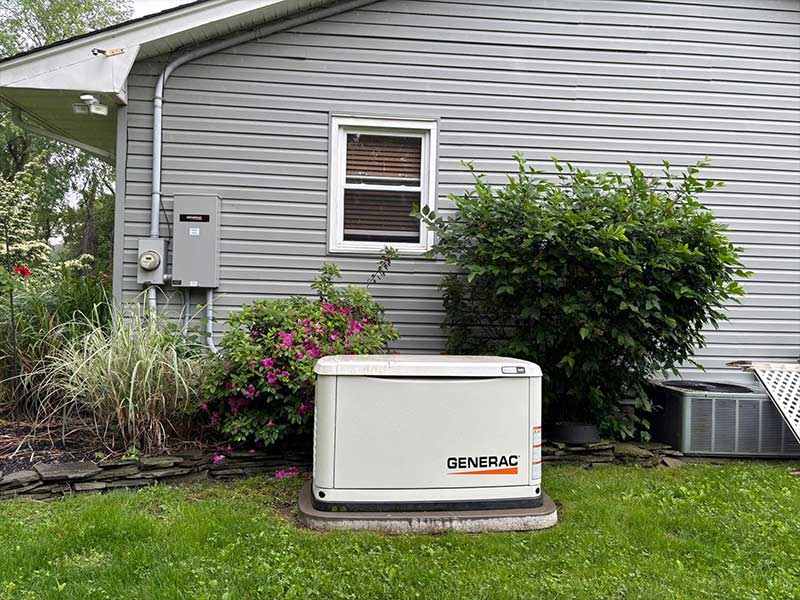
Sizing basics
How generator sizing works.
Sizing starts with one question: what will be running at the same time? A generator doesn’t need to cover every appliance you own added together. It needs to handle the combination that realistically runs at once during an outage, plus a margin so it isn’t working at its limit.
That’s why a proper sizing begins at your electrical panel and your major appliances, not at your square footage. Two 2,500-square-foot homes, one with gas heat and a gas range and one that’s fully electric with a heat pump, can need very different generators.
Running vs. starting loads
The surge most people forget about.
Every appliance has a running load, the power it draws once it’s operating. Equipment with an electric motor or compressor also has a starting load: a brief surge, often several times its running draw, in the moment the motor starts.
Air conditioners, heat pumps, well pumps and refrigerators all behave this way. So a generator has to do two jobs: carry the total running load, and absorb the surge when the largest motor kicks on while everything else is already running. If it can’t, you may see lights dim, the compressor struggle to start, or the generator protect itself by shutting down.
Soft-start devices fitted to an air conditioner can reduce that surge, which sometimes lets a smaller generator handle central air comfortably.
Major loads
The appliances that shape your generator size.
A walk through the biggest electrical demands in a typical Columbia-area home, and why each one matters.
Central AC & heat pumps
Usually the largest motor load in a South Carolina home, and the main reason whole-home systems are sized up.Electric heat strips
Many heat pumps use electric auxiliary heat on cold mornings. It’s a large load that’s easy to overlook in a summer conversation.Refrigerators & freezers
Modest running loads, but their compressors cycle on and off all day, so they add starting surges.Well pumps
On a private well, no power means no water. Pump motors have significant starting demand, so they need to be counted carefully.Ranges, water heaters & dryers
Electric versions draw a lot of steady power. Gas versions draw very little, which changes the math considerably.Sump pumps, medical & office gear
Smaller loads, but often the reason a household wants backup power in the first place.
Coverage & sizing
Whole-home vs. essential-circuit sizing.
Whole-home
Sized for the house as you live in it
The generator is sized for your realistic simultaneous load, including HVAC, and usually connects through a service-rated transfer switch so every circuit is backed up.Essential circuits
Sized for a chosen list
The generator only needs to cover the circuits moved to an essential-loads panel. It’s smaller and typically less expensive, but anything left off the list stays dark.
For a broader look at both approaches, including fuel and placement, see the whole-home generator installation guide.
Get your home sized properly.
A Certified Master Electrician-led evaluation looks at your panel and your real loads, not just your square footage.
Load management
Load management: big-house comfort without an oversized generator.
Load management equipment watches how much power the generator is supplying. When demand approaches the generator’s capacity, it temporarily switches off lower-priority large loads, such as a second air conditioner, an electric water heater or an EV charger, and brings them back when there’s room.
The result is that a right-sized generator can serve a home with several large appliances, because they take turns instead of all starting at once. The trade-off is that a managed appliance may pause during an outage. Deciding which loads get priority is part of good system design.
Automatic transfer switches
How an automatic transfer switch works.
The automatic transfer switch (ATS) is the brain of a standby system. During an outage, it:
- Continuously monitors the utility power coming into your home.
- Detects a loss of power and, after a brief delay to ignore momentary flickers, signals the generator to start.
- Waits until the generator is running at stable voltage and frequency, then moves your home’s circuits onto it.
- Keeps watching the utility. When power returns and holds steady, it switches your home back.
- Lets the generator run briefly to cool down before it shuts off and returns to standby.
A service-rated switch installs between the meter and your main panel for whole-home coverage. A load-side switch typically feeds a separate panel holding your essential circuits.
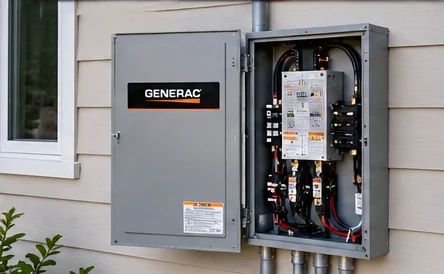
Safety
Why safe power transfer isn’t optional.
A transfer switch is designed so your home is connected to the utility or the generator, never both. Without that separation, generator power can flow backward onto utility lines, a hazard known as backfeed that can injure line workers and damage equipment. The National Electrical Code requires transfer equipment for permanently installed optional standby systems for exactly this reason.
Please never connect a generator to your home by plugging it into a dryer or other outlet. This is dangerous and should not be attempted. Generator connections are work for a licensed electrician, done under permit and inspected.
Avoid these
Common sizing mistakes.
Sizing by square footage
Floor area says little about whether your heat, range and water heater are gas or electric.Ignoring starting loads
A generator that handles the running total can still struggle when the AC compressor starts.Forgetting heat strips
Summer-focused planning can miss electric auxiliary heat that runs on cold winter mornings.Using the wrong fuel rating
Basing the plan on a propane rating when the unit will run on natural gas can leave you short.Not planning ahead
An EV charger, pool equipment or an addition can change your needs within a few years.Oversizing “to be safe”
A much larger unit costs more to buy and install, and can use more fuel than you need.
Professional evaluation
Why sizing belongs with a qualified electrician.
Getting the size right means reading your panel, understanding your service capacity, accounting for motor starting demands and designing how the transfer switch and any load management fit together. Those are electrical design decisions with real safety consequences.
A qualified evaluation also catches problems before they become expensive, like an aging panel that should be addressed first, or a gas meter that can’t supply the generator. And once your system is in, our maintenance and storm prep guide covers keeping it ready.
From a Chapin homeowner
Installed by a team customers recommend.
5.085+ Google reviews(opens Cagen Electric’s Google profile in a new tab)“Spencer and Vinny from Cagen Electric did an amazing job installing a Kohler generator at my home in Chapin, SC. They were professional, efficient, clean, and consistent throughout the entire installation. The work was done quickly and explained the whole process, and I couldn’t be happier with the results. Highly recommend Spencer, Vinny, and Cagen Electric!”
Keep planning
More generator guides
- Whole-Home Generator InstallationCoverage options, fuel choices, placement, permits and what drives the cost of a professionally installed standby generator.Read the guide
- Generator Maintenance & Storm PrepExercise cycles, batteries, oil, warning lights and a practical checklist for getting your generator ready for storm season.Read the guide
- Midlands Home GeneratorsHow standby power works, our installation process, service area and customer reviews.Back to the homepage
Frequently asked questions
Sizing & transfer switch questions.
Straight answers to the technical questions homeowners ask most.
Can I size a generator myself with an online calculator?
A calculator can give you a rough starting point, but it can't see your electrical panel, the starting demands of your specific air conditioner or well pump, or the fuel you'll use. Treat it as a conversation starter, and have a qualified electrician confirm the size before you buy.
Will my central air conditioning run on a standby generator?
It can, as long as the generator is sized to handle the air conditioner's starting demand along with everything else that's running, or load management is used to coordinate it. Some homes also add a soft-start device to the AC to reduce the surge when the compressor starts.
What is a service-rated transfer switch?
It's an automatic transfer switch designed to be installed between your electric meter and your main panel, and it includes the service disconnect. Because it sits ahead of the whole panel, it's the usual choice for whole-home backup.
Does an EV charger change how my generator should be sized?
It can. A Level 2 charger draws a large amount of power for hours at a time. Many homeowners choose to leave it off generator power or control it with load management rather than size the whole system around it. Mention it during your consultation.
Can a transfer switch work with my existing electrical panel?
Often, but not always. The age, condition and capacity of your panel and electrical service all matter. In some homes a panel or service upgrade is the right first step, which an electrician can identify during the evaluation.
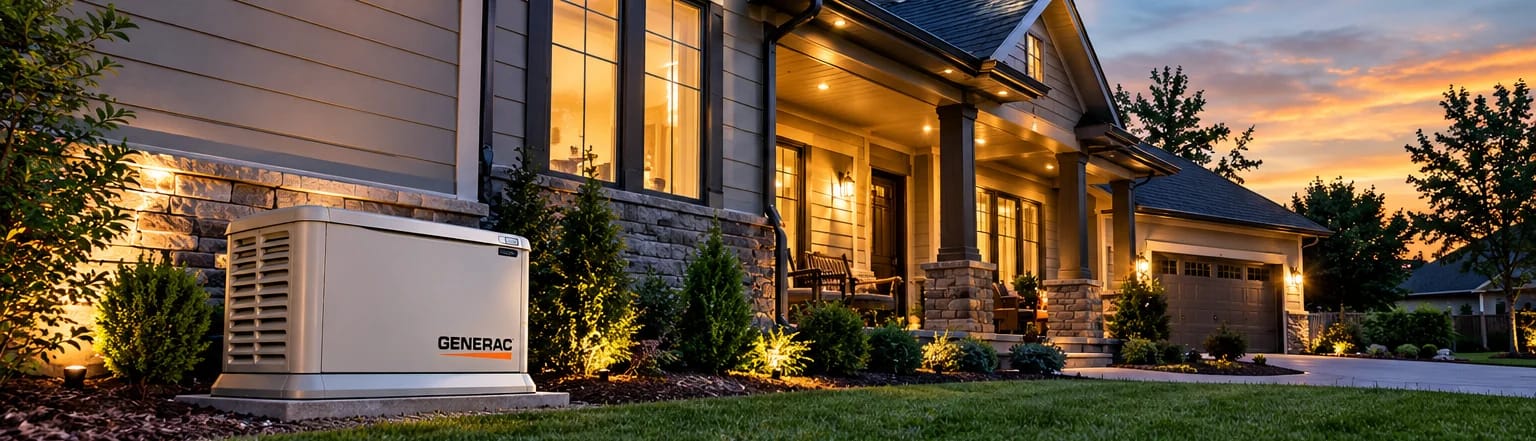
Free generator consultation
The next outage is coming. Your home can be ready for it.
Request a free consultation on the right standby generator for your household. It’s the simplest way to find out what it would take to keep your home running through the next storm.
Opens our consultation request form, hosted by Typeform, in a new tab.
Prefer to talk it through?
Call Cagen Electric (803) 590-1428Tell us about your home
A short set of questions about your property and what you want to keep running.
Hear from a local installer
Your request goes to Cagen Electric, who will follow up with you directly.
Get straight answers
Sizing, fuel and coverage options explained, with no decisions needed until you understand them.