Maintenance guide
Home generator maintenance & storm preparedness
A standby generator can sit quietly for months and then be asked to run for days. Here’s what it handles on its own, what needs a little attention from you, and how to make sure it’s ready before the next big storm rolls through.
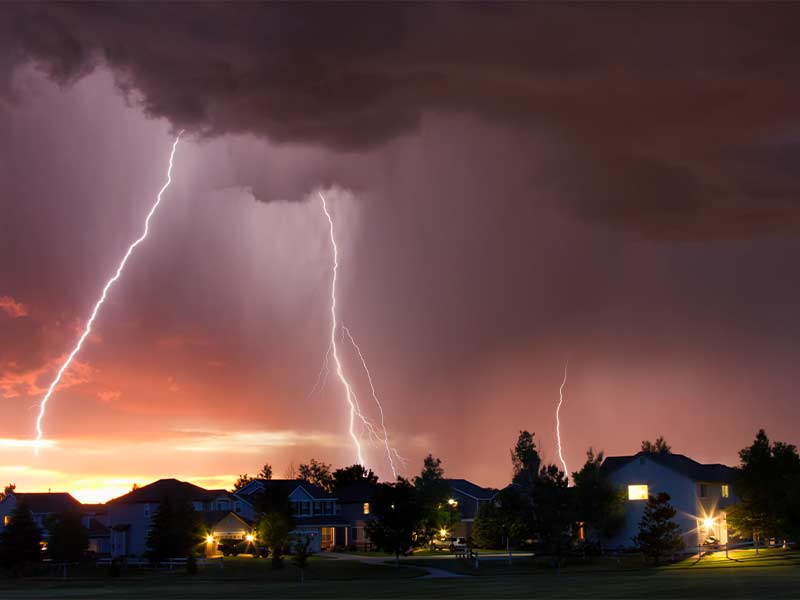
Why it matters
Reliability is earned between outages.
Your generator is an engine. Like a car that rarely leaves the garage, it can develop problems simply from sitting: a battery that slowly loses strength, oil that ages, a filter that clogs, or a nest built in a quiet corner of the enclosure.
None of that shows up on a calm, sunny day. It shows up when a line of summer storms knocks out power across Lexington and Irmo, and the generator you were counting on won’t start. Routine care is how you make sure the investment pays off when it’s actually needed.
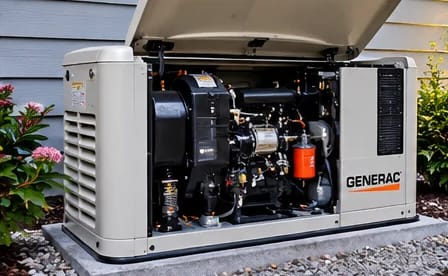
Automatic exercise
What your generator does on its own.
Most standby generators run an automatic exercise cycle on a schedule, often weekly or every other week. For a few minutes, the engine starts and runs. That keeps internal parts lubricated, charges the battery, and gives the controller a chance to spot problems while there’s still time to fix them.
Many controllers also run self-diagnostics and record faults, and some models can send alerts to your phone. The exercise cycle is a check-up, not a full test under your home’s load, so it complements routine service rather than replacing it.
Routine care
The parts that need regular attention.
Exact intervals come from your owner’s manual. These are the items almost every maintenance schedule covers.
Battery
The battery starts the engine. Terminals should be clean and tight, and batteries are replaced every few years according to the manufacturer’s schedule.Oil & oil filter
Changed on a time and run-hour schedule. Long outages count, so a busy storm season can bring the next change due early.Air filter & spark plugs
Inspected and replaced as specified so the engine breathes and starts reliably.Fuel supply
Natural gas connections and regulators should be in good condition. With propane, keep an eye on tank levels.Clear surroundings
Keep plants, mulch, leaves and stored items away from vents. Watch for insects or rodents nesting inside.Controller setting
The unit must be left in automatic mode. A generator switched off after service won’t start during an outage.
Warning indicators
How to read the status lights.
Every brand labels its controller differently, so keep your manual handy. As a general pattern, most units use a steady indicator to show the system is ready, a separate warning for maintenance that’s due or a minor issue, and an alarm for a fault that prevents normal operation.
- Glance at the status indicator every so often, and after every storm or outage.
- Note any warning or alarm code before resetting anything. It tells a technician what happened.
- A maintenance reminder means service is due, not that the generator is failing. Don’t let it slide into storm season.
- An alarm that returns after a reset needs a qualified technician.
Testing
Testing: what you can watch, and what a pro does.
The easiest test is simply to notice the exercise cycle: on its scheduled day, you should hear the generator start, run smoothly and shut off, with the status indicator showing ready afterward.
A deeper test, where a qualified technician simulates an outage so the transfer switch moves your home onto generator power, confirms the whole system works under real load. Testing that involves the transfer switch or electrical panel is work for a professional, not a DIY project.
Still planning your first standby generator?
Start with a system that’s sized, installed and tested properly. Request a free consultation with Cagen Electric.
Storm season
Your storm-season checklist.
The Atlantic hurricane season runs from June 1 to November 30, and summer thunderstorms are common well before then. A few minutes of preparation goes a long way.
- Confirm the controller is in automatic mode and showing ready.
- Make sure routine service is current, especially if the last season was busy.
- Clear branches, leaves and anything stored near the enclosure and vents.
- If you use propane, check your tank level and schedule a delivery before storms are forecast.
- Keep your owner’s manual and your service contact somewhere easy to find.
- Test the carbon monoxide alarms inside your home.
- During a long outage, follow the manufacturer’s guidance on checking oil and other items.

Troubleshooting
The most common reasons a generator lets people down.
A weak or dead battery
One of the most frequent causes of a no-start, and one of the easiest to prevent with routine service.Overdue oil or service
Running low on oil or far past the service interval can trigger shutdowns when you need power most.Left switched off
After service or a reset, a unit not returned to automatic mode simply won’t respond to an outage.Debris & pests
Leaves, mulch, nests and chewed wiring can block airflow or cause faults.Fuel supply problems
An empty propane tank, a closed valve or a gas supply that can’t keep up will stop the engine.Ignored warnings
A maintenance light that’s been on for months is a problem waiting for a storm.
Service life
How long will a standby generator last?
A well-maintained standby generator can serve a home for many years, but there’s no single number that applies to every unit. Service life depends mostly on:
- Run hours. A system that carries a home through several long outages works harder than one that mostly exercises.
- Maintenance. Following the manufacturer’s schedule is the biggest factor you control.
- Environment. Heat, humidity, debris and pests all take a toll over time.
- Sizing & installation. A generator that’s regularly overloaded or poorly installed is under more strain. Our sizing guide explains why fit matters.
Know your limits
When to call a qualified professional.
- A warning or alarm returns after you’ve reset it.
- The generator doesn’t run its scheduled exercise, or won’t start.
- You notice unusual noise, smoke, leaks or vibration.
- Your home doesn’t switch to generator power during an outage, or doesn’t switch back.
- The unit has been exposed to flooding or physical damage.
For routine maintenance on an existing generator, your manufacturer’s authorized service network is a good place to start. If you’re planning a new system for your home in Columbia, Chapin, Newberry or nearby, our whole-home installation guide covers what to expect, and a free consultation is the easiest next step.
From a Chapin homeowner
Installed by a team customers recommend.
5.085+ Google reviews(opens Cagen Electric’s Google profile in a new tab)“Spencer and Vinny from Cagen Electric did an amazing job installing a Kohler generator at my home in Chapin, SC. They were professional, efficient, clean, and consistent throughout the entire installation. The work was done quickly and explained the whole process, and I couldn’t be happier with the results. Highly recommend Spencer, Vinny, and Cagen Electric!”
Keep planning
More generator guides
- Whole-Home Generator InstallationCoverage options, fuel choices, placement, permits and what drives the cost of a professionally installed standby generator.Read the guide
- Generator Sizing & Transfer SwitchesHow running and starting loads, load management and automatic transfer switches decide the right system for your home.Read the guide
- Midlands Home GeneratorsHow standby power works, our installation process, service area and customer reviews.Back to the homepage
Frequently asked questions
Maintenance & storm prep questions.
Quick answers for keeping a standby generator ready to run.
How often should a home standby generator be serviced?
Follow the maintenance schedule in your owner's manual. Most manufacturers call for routine service at least once a year and after a set number of operating hours, which means a long outage or a busy storm season can bring the next service due sooner.
Is it normal for my generator to start up on its own?
Yes. Most standby generators run a scheduled exercise cycle, usually once a week or every other week, for a few minutes at a set day and time. If it starts on schedule and shuts down again, it's doing its job.
How long can a standby generator run during an outage?
On natural gas, it can keep running as long as the utility gas supply holds, but manufacturers generally recommend checking oil and other items at intervals during extended operation. On propane, run time is limited by how much fuel is in your tank, so keep it topped up ahead of storm season.
Should I cover my generator before a storm?
No. Standby generator enclosures are designed to sit outdoors in the weather, and covering one can block the airflow it needs to run safely. Instead, clear debris, plants and anything stored around it, and follow your manufacturer's guidance.
What should I do if I smell gas near my generator?
Leave the area, don't operate switches or the generator, and call your gas utility or 911 from a safe place. Don't return until it has been checked and cleared.
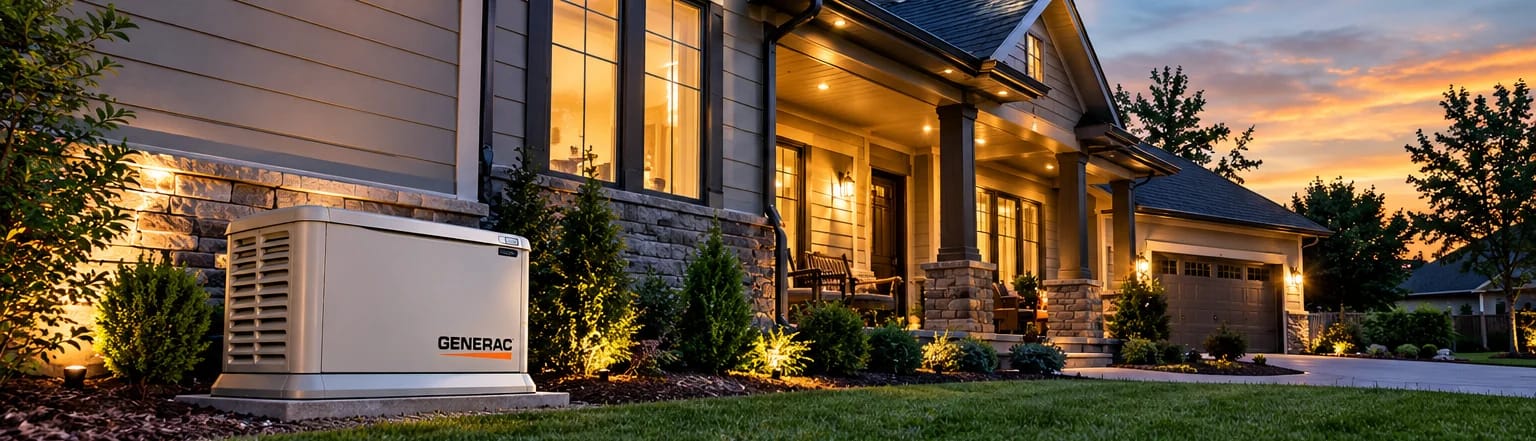
Free generator consultation
The next outage is coming. Your home can be ready for it.
Request a free consultation on the right standby generator for your household. It’s the simplest way to find out what it would take to keep your home running through the next storm.
Opens our consultation request form, hosted by Typeform, in a new tab.
Prefer to talk it through?
Call Cagen Electric (803) 590-1428Tell us about your home
A short set of questions about your property and what you want to keep running.
Hear from a local installer
Your request goes to Cagen Electric, who will follow up with you directly.
Get straight answers
Sizing, fuel and coverage options explained, with no decisions needed until you understand them.